AWDB speaks with Mark Salvatus, a multimedia artist from the Philippines who often incorporates communities into his artwork, critically addressing socio-economic issues, urbanisation and topics surrounding densely populated urban cities.
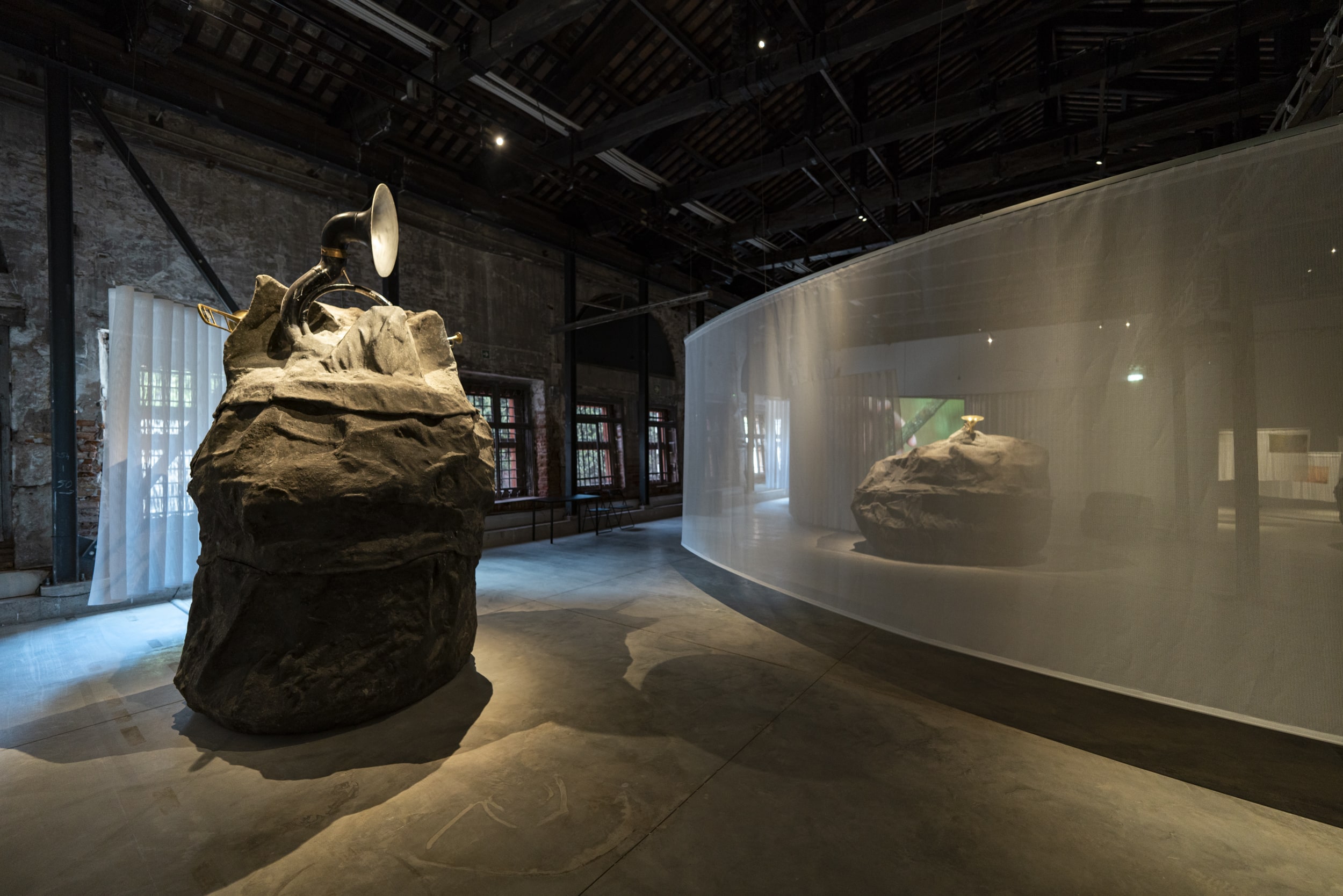
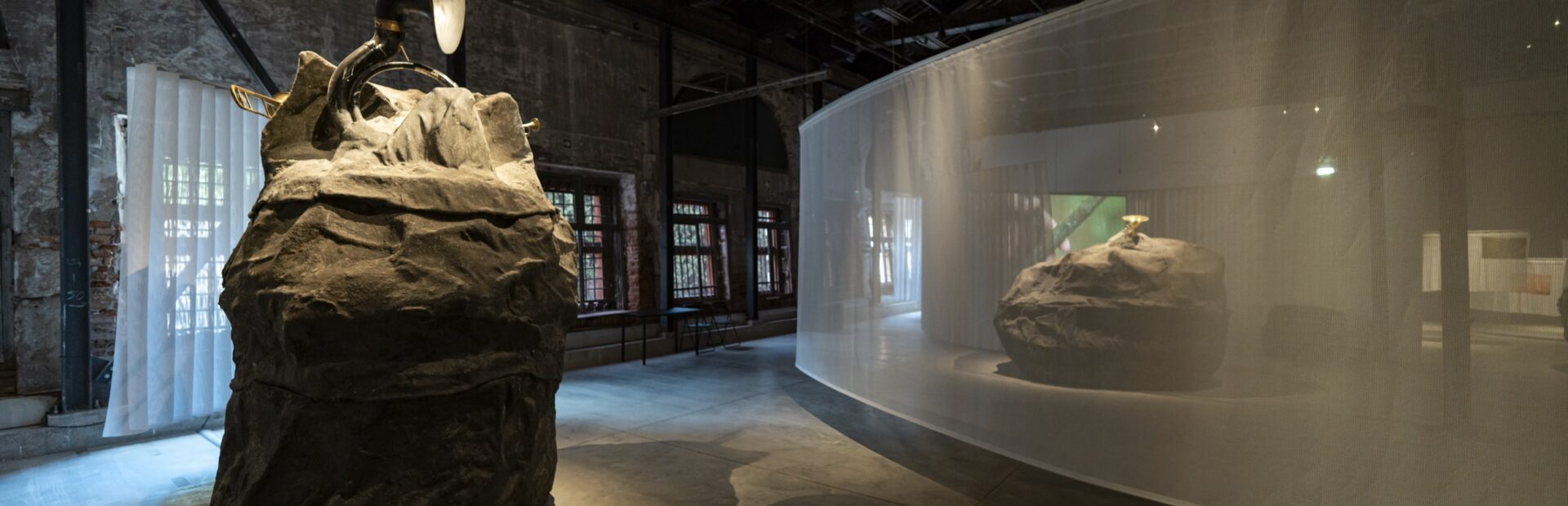
Salvatus’ solo project will represent the Philippine Pavilion at the 60th Venice Biennale and is titled ‘Sa kabila ng tabing lamang sa panahong ito / Waiting just behind the curtain of this age’. Curated by Carlos Quijon Jr., this exhibition highlights Mt. Banahaw and Lucban, the city Salvatus grew up in. With involvement in revolutionary and political events, Salvatus illustrates the city’s past, the resilience of its people, and the looming future ahead.
Salvatus shared with us how he bridges the gap between art and community and how he expresses the bigger issues through his artworks.

Tell us more about your participation at this year’s Venice Biennale. What will you be presenting and what themes does it touch on?
During the Spanish colonisation of the Philippines, a local native from my hometown of Lucban aspired to become a priest. He was not allowed to become part of the order because Filipinos were not allowed to have a position in the church. His name was Apolinario de la Cruz, locally known as Hermano Puli. He founded a congregation only for Filipinos and started a small revolution against the empire that eventually spread all over Luzon. I was inspired by his dream of freedom, a belief that is waiting to happen. That dream was not realised. He was captured and executed and his body parts were quartered and displayed in different parts of my hometown.
Before being captured, Puli stated to his followers “Ang tagumpay ay nasa kabilang tabing lamang.” (Success is waiting just behind the curtain.) His message is poetic as much as it is prophetic; it can be applied in various contexts. I wanted to extend his dream, my ancestor’s dreams, not only about Puli, but also dreams and aspirations of my grandfather, fellow Lucbanins, and its relationship with other life forms, the surroundings, the mountain, and imagine the world as a stage or something that’s just about to happen, an imminent future, a rehearsal.
In what ways does your art bring awareness to historical events, considering how most recorded history often glosses over crucial details, or builds a bias to one side?
I am interested in the aspect of history that has a life of its own. It transforms, it is fluid, and complicated. It is not only written in books, but also in histories that I discovered in different circumstances, and places that bring new relevance to how we live in contemporary times. I try to inject myself, as an artist, to contemplate and imagine another perspective of history that I can talk about through artmaking. Most of the time it starts with an object, from there, I discovered other histories that are less known but can connect to a larger history of the nation, or even the world. I think being aware of the history is not enough to read the meaning of the artwork, but multiple relationships can be created and sustained by experiencing it, whether it be installation, video, or sound work.

In response to the Covid-19 pandemic and more regulations on hygiene and big social groups, how has this affected collaboration with your art and group projects?
The pandemic made a huge impact on every aspect of my life- personal and social. I became more reflective on my artistic practice, especially on production to presentation. During the worldwide lockdown, I recalibrated my thoughts and energies to more meaningful projects, not to be selective, but contemplative, at the same time productive, in order to live and survive. Going back to local experiences and stories closer to home made me view the world from within and I try to echo it in my presentation at Venice. The pandemic also made our homes a microecology site of creative practice in collaboration with our family, pets, plants, and other existence.
With a younger generation of lower media literacy and shorter attention spans, would this affect the perception of your artworks and its deeper meaning?
I have a nine-year-old son, and his view of the world comes from the physical and the virtual, and it is linked to each other. During the pandemic in the Philippines, children were not allowed to leave the house for almost 2 years, so he and his generation developed different constructed worlds. I am curious how my son sees the world and it is not about the meaning he is interested in, but the energies that can be created by the experiences beyond the duality of the physical and the virtual. And, over time, he can develop his meaning. I am more interested in the energies of these experiences that can be circulated and shared even if it is just for 10 seconds. Experiencing an artwork with multiple energies eventually affects the perception of our world.

While the process of making art can be enjoyable, it also has to be relatable to an audience and be made profitable. How do you bridge that gap between creating artworks you like that are also understood well?
I am creating artwork to be able to understand and misunderstand myself and my relationship with the world. It is an enduring process I face every day as part of life. I am more interested in opening doors rather than bridging the gap. A bridge can only connect you to the other side. By opening doors, it can lead you to wider possibilities.
The Philippine Pavilion at the 60th Venice Art Biennale will be open to the public from 20 April to 24 November 2024. For more information please click here.
INTERVIEW COURTESY OF ART WORLD DATABASE AND MARK SALVATUS, JULY 2024.